

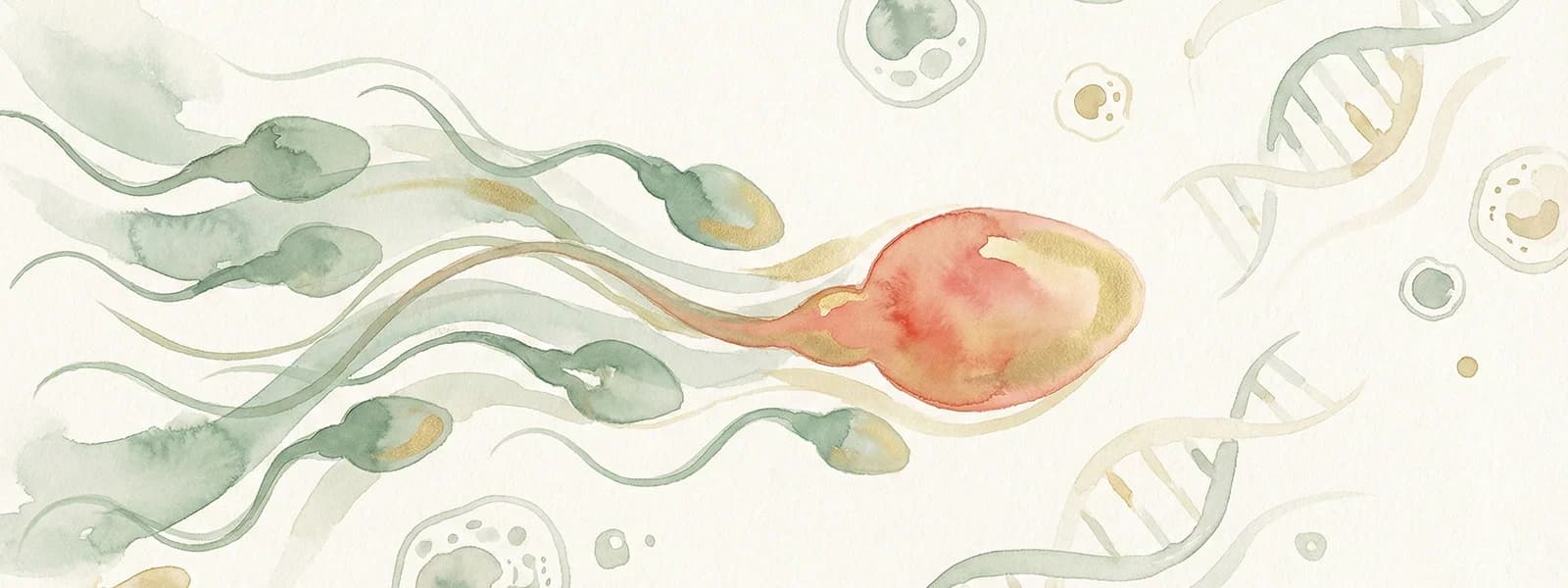
Male Fertility Basics: The Complete Guide
Everything men need to know about fertility - how sperm production works, what affects it, understanding semen analysis, and steps to improve your fertility.
For too long, fertility has been treated as a "women's issue." When couples struggle to conceive, the focus often lands on her-her tests, her treatments, her body. But here's a statistic that might surprise you: male factors contribute to approximately 40-50% of all infertility cases. That's nearly half.
If you're a man reading this, maybe you're here because you and your partner are trying to conceive. Maybe you've just received concerning test results. Or maybe you're simply curious about something you were never taught to think much about.
Whatever brought you here, understanding your fertility matters. Not just for conception, but for your overall health-because the same factors that affect sperm often affect your cardiovascular system, metabolic health, and longevity. Your fertility is a window into your wellbeing.
This guide will walk you through how male fertility works, what can affect it, and what you can actually do about it. No judgment, no shame-just the information you need. For broader context on reproductive health, explore our complete Understanding Fertility resource.
How Male Fertility Works
Male fertility seems simple on the surface: produce sperm, deliver sperm, hope for the best. But the reality is far more complex-and understanding that complexity helps explain why things sometimes don't work as expected.
The Anatomy
Testes (testicles): These two oval-shaped organs, housed in the scrotum, have two crucial jobs: producing testosterone and producing sperm. They're located outside the body because sperm production requires temperatures 2-4°C cooler than core body temperature. This is why conditions that increase testicular heat can affect fertility.
Epididymis: A coiled tube sitting behind each testicle where sperm mature and are stored. Sperm spend about 2-3 weeks here, developing the ability to swim and fertilize an egg.
Vas deferens: The tubes that carry sperm from the epididymis toward the urethra during ejaculation. These are what's cut during a vasectomy.
Seminal vesicles and prostate: These glands produce the fluid that combines with sperm to create semen. This fluid provides nutrients and protection for sperm on their journey.
Urethra: The tube through which both urine and semen exit the body (though never simultaneously-a valve prevents this).
Sperm Production: A 74-Day Journey
Unlike women, who are born with all their eggs, men continuously produce new sperm throughout their lives-starting at puberty and continuing into old age, though production and quality decline over time.
The process, called spermatogenesis, takes approximately 72-74 days from start to finish. This timeline is important: it means that lifestyle changes you make today won't affect your sperm quality until about three months from now. It also means that temporary illness, stress, or exposure to heat will affect sperm produced during that time, but the effects aren't permanent.
Here's the basic process:
- Germ cells in the testes begin dividing
- Through multiple stages, they develop into spermatocytes, then spermatids, then finally spermatozoa (mature sperm)
- Newly formed sperm move to the epididymis to mature
- During ejaculation, sperm travel through the vas deferens, mix with seminal fluid, and are expelled
A healthy man produces millions of sperm every day-roughly 1,500 per second. Each ejaculation contains anywhere from 40 million to over 300 million sperm. These numbers exist because the journey to fertilization is extraordinarily difficult: of those millions, only a few hundred will reach the egg, and only one will fertilize it.
What Sperm Need to Do
For fertilization to occur, sperm must:
Survive in the female reproductive tract: The vaginal environment is acidic and hostile. Sperm rely on seminal fluid for initial protection and on cervical mucus (which becomes friendlier around ovulation) for continued survival. Sperm can live in the female reproductive tract for up to five days under optimal conditions.
Swim effectively: The journey from vagina to fallopian tube is roughly 15-18 centimeters-not far for a human, but an epic trek for a cell about 0.05mm long. This requires strong, coordinated tail movement.
Undergo capacitation: Once in the female reproductive tract, sperm undergo chemical changes that give them the ability to penetrate an egg. This process takes several hours.
Penetrate the egg: Sperm must first get through the cells surrounding the egg (corona radiata) and then through the egg's outer shell (zona pellucida). This requires enzymes released from the sperm head (the acrosome reaction).
Any issues with survival, swimming, or function can affect fertility.
Understanding Semen Analysis
If you're investigating fertility, a semen analysis is typically the first test-and it can feel intimidating. Knowing what the test measures, and what the results mean, can make the experience less anxiety-inducing.
What's Being Measured
Volume: The total amount of semen per ejaculation. Normal is 1.5ml or more. Low volume might indicate an issue with the seminal vesicles or prostate, or an obstruction.
Concentration (count): The number of sperm per milliliter. Normal is 15 million or more per ml. "Low sperm count" (oligospermia) can make conception more difficult, though it's still often possible.
Total sperm count: Concentration multiplied by volume. Normal is 39 million or more per ejaculation.
Motility: The percentage of sperm that are moving, and how well they're moving. Normal is at least 40% motile, with at least 32% showing progressive motility (moving forward rather than in circles or twitching in place). If motility is low, this is called asthenozoospermia-learn more about sperm motility issues and treatment options.
Morphology: The percentage of sperm with normal shape-normal head, midpiece, and tail. Here's where it gets confusing: using strict (Kruger) criteria, "normal" morphology is only 4% or higher. Yes, that means 96% of sperm being abnormally shaped can still be normal.
Other factors: pH, white blood cells (which might indicate infection), and liquefaction time (semen should become liquid within 20-30 minutes).
How to Prepare for the Test
Abstinence: You'll typically be asked to abstain from ejaculation for 2-5 days before the test. Too short, and volume and count may be lower. Too long, and motility may be affected.
Collection: You'll produce a sample through masturbation, usually at the clinic (to ensure the sample stays at proper temperature) or at home if you live nearby and can deliver it within an hour. The entire sample must be collected-losing the first portion affects results significantly.
Timing: If your first results are abnormal, you'll likely repeat the test in 2-3 months, since sperm quality varies and a single test is just a snapshot.
Interpreting Results
A normal semen analysis doesn't guarantee fertility, and an abnormal one doesn't mean you can't conceive. Semen parameters exist on a spectrum, and many men with "below normal" results father children naturally.
What the results do tell you is whether there's an obvious issue that might benefit from treatment, and how your profile might influence treatment recommendations. For example, severe male factor infertility might lead your doctor to recommend IVF with ICSI rather than trying IUI.
Factors That Affect Male Fertility
Many factors can influence sperm production and quality. Some you can control; others you can't. Understanding both helps you focus your efforts effectively.
Medical Conditions
Varicocele: Enlarged veins in the scrotum, present in about 15% of men but in 40% of men with fertility issues. Varicoceles can raise testicular temperature and affect sperm production. Surgical repair often improves sperm parameters.
Infections: Past or current infections can affect fertility. Sexually transmitted infections like chlamydia and gonorrhea can cause scarring and blockages. Epididymitis (epididymis infection) and orchitis (testicular inflammation, sometimes from mumps) can also cause damage.
Hormonal imbalances: Though less common than in women, hormonal issues can affect men too. Low testosterone, high prolactin, or thyroid problems can all impact sperm production. These are usually identifiable through blood tests and often treatable.
Ejaculation issues: Retrograde ejaculation (semen going into the bladder instead of out), premature ejaculation, or erectile dysfunction can all affect the ability to deliver sperm where it needs to go. Many of these issues have solutions.
Genetic factors: Certain genetic conditions affect fertility. Klinefelter syndrome (XXY chromosomes), Y-chromosome microdeletions, and cystic fibrosis gene mutations can all cause fertility problems ranging from low sperm count to complete absence of sperm. If no sperm are found in the ejaculate, this condition is called azoospermia, which has several potential causes and treatment approaches.
Undescended testicles: If testicles don't descend into the scrotum during childhood, sperm production can be affected even after surgical correction.
Prior surgeries or treatments: Hernia repairs, vasectomy (even if reversed), and cancer treatments can all affect fertility.
Lifestyle Factors
Heat exposure: Sperm production is highly sensitive to temperature. Frequent hot tub or sauna use, tight underwear, prolonged laptop use on the lap, and occupations involving heat exposure (like welding or baking) can all affect sperm. The good news: these effects are usually reversible once the heat source is removed.
Smoking: Smoking is consistently associated with reduced sperm count, motility, and morphology, as well as increased DNA damage in sperm. Quitting improves parameters within a few months.
Alcohol: Heavy drinking affects testosterone levels and sperm production. Moderate drinking's effects are less clear, but limiting alcohol while trying to conceive is generally recommended.
Recreational drugs: Marijuana, cocaine, anabolic steroids, and opioids can all negatively affect sperm production and function. Anabolic steroids are particularly problematic-they can shut down natural testosterone production entirely.
Obesity: Excess weight affects hormone levels (increasing estrogen, decreasing testosterone) and may directly impact sperm production. Weight loss can improve parameters.
Stress: Chronic severe stress may affect hormone levels and sperm production, though the research is mixed. Regardless, managing stress is worthwhile for overall health.
Diet: No specific foods are magic, but a healthy diet-rich in antioxidants, omega-3 fatty acids, and key nutrients like zinc and folate-is associated with better sperm quality in some studies.
Environmental Factors
Toxins and chemicals: Exposure to pesticides, heavy metals, and certain industrial chemicals can affect sperm. Occupational exposures are the main concern-if you work with chemicals, understand the risks and use appropriate protection.
Radiation: Significant radiation exposure (from cancer treatment, for example) can damage sperm production, sometimes permanently.
Medications: Some medications can affect fertility-certain antibiotics, antidepressants, blood pressure medications, and especially testosterone replacement therapy (which, counterintuitively, suppresses natural sperm production). Always discuss fertility concerns with your doctor before starting new medications.
Age and Male Fertility
While men don't face the same biological deadline as women, age does affect male fertility-just more gradually.
What Changes With Age
Sperm quality: After about age 40, sperm motility and morphology tend to decline. DNA damage in sperm increases.
Testosterone: Levels typically decline by about 1% per year after age 30. This can affect libido, erectile function, and potentially sperm production.
Time to conception: Studies show it takes longer to conceive when the male partner is older, even accounting for the female partner's age.
Genetic risks: The risk of certain genetic conditions in offspring increases slightly with paternal age, though the increases are much smaller than the maternal age effects.
What This Means Practically
Men retain the ability to father children much later in life than women retain the ability to conceive. But that doesn't mean age is irrelevant. If you're planning to have children, don't assume you can wait indefinitely.
If you're an older man trying to conceive with a younger partner, your age might still be a factor worth investigating if conception isn't happening.
Improving Your Fertility
If you're concerned about your fertility-whether because of test results or just because you want to optimize your chances-there are concrete steps you can take.
Lifestyle Changes (Give These 3 Months)
Quit smoking: If you smoke, stopping is the single most impactful change you can make for your fertility.
Limit alcohol: Stick to moderate consumption at most while trying to conceive.
Maintain a healthy weight: If you're significantly overweight, losing weight can improve hormone balance and sperm parameters.
Exercise moderately: Regular exercise supports overall health and testosterone levels. However, excessive endurance training or heavy cycling may have negative effects.
Reduce heat exposure: Switch to loose-fitting underwear, avoid hot tubs and saunas, take breaks if you sit for long periods, and keep laptops off your lap.
Eat well: Focus on fruits, vegetables, whole grains, healthy fats, and lean protein. Some evidence supports supplementing with antioxidants (like vitamin C, vitamin E, selenium, and zinc), though talk to your doctor first.
Manage stress: Find healthy outlets-exercise, hobbies, social connection, or professional support if needed.
Medical Interventions
Treat underlying conditions: If you have a varicocele, infection, or hormonal imbalance, treating it can improve fertility.
Medication: In some cases, medications can help-clomiphene or hCG can boost testosterone and sperm production in men with hormonal issues.
Surgery: Varicocele repair, reversal of vasectomy, or procedures to retrieve sperm directly from the testicles (for men with obstruction or very low counts) are all options.
Assisted Reproduction
When natural conception isn't happening, assisted reproduction techniques can help:
IUI (Intrauterine Insemination): Sperm is washed, concentrated, and placed directly in the uterus. This can help with mild male factor issues.
IVF (In Vitro Fertilization): Eggs and sperm are combined in a laboratory. More sperm reach the eggs than in natural conception.
ICSI (Intracytoplasmic Sperm Injection): A single sperm is injected directly into each egg. This allows fertilization even with very low sperm counts or poor motility.
Surgical sperm retrieval: If no sperm are present in ejaculate (azoospermia), sperm can sometimes be retrieved directly from the testicles or epididymis and used with ICSI.
Modern reproductive medicine can help many men with even severe fertility issues become biological fathers.
When to Seek Help
If you and your partner have been trying to conceive for 12 months (or 6 months if your partner is over 35), it's time to seek evaluation-and that includes you, not just her.
See a doctor sooner if you have:
- Known issues like undescended testicles, previous surgeries, or cancer treatment
- Symptoms of low testosterone (low libido, fatigue, erectile difficulties)
- Pain, swelling, or lumps in your testicles
- History of infections that might have affected fertility
- Reason to suspect you might have a problem
A reproductive urologist specializes in male fertility issues and can provide thorough evaluation and treatment options.
The Emotional Side
Fertility struggles affect men emotionally too, even if that's not always acknowledged. You might feel:
- Inadequate or "less of a man"
- Guilty that you might be "the problem"
- Helpless about something you can't control
- Pressure to be strong for your partner while suppressing your own feelings
- Isolation because men don't typically talk about this
These feelings are normal. Fertility is deeply tied to identity for many people, and struggling with it is legitimately difficult.
If you're finding it hard to cope, talking to a counselor who specializes in fertility issues can help. Your feelings matter, and you don't have to navigate this alone.
Key Takeaways
- Male factors contribute to nearly half of all infertility cases-this isn't just a "women's issue"
- Sperm production takes about 74 days, so lifestyle changes take about 3 months to show effects
- A semen analysis is the primary test for male fertility and is nothing to be anxious about
- Many factors affect sperm quality, but most are treatable or improvable
- Age affects male fertility too, just more gradually than female fertility
- Modern medicine can help most men with fertility issues become fathers
This content is for educational purposes only and should not replace professional medical advice. If you have concerns about your fertility, please consult with a qualified healthcare provider.
Last updated: January 12, 2026
Stay informed
Get the latest fertility information and UAE-specific updates delivered to your inbox.
Related articles

Age and Fertility: What the Research Really Shows
Understand how age affects fertility for both women and men - the real numbers, what they mean for you, and how to make informed decisions at every stage.
12 min read

Female Fertility Basics: What Every Woman Should Know
A comprehensive guide to understanding your reproductive system, hormones, menstrual cycle, and the factors that affect female fertility. Empowering education without the medical jargon.
16 min read

Fertility Glossary: Medical Terms Explained Simply
A comprehensive alphabetical glossary of fertility and reproductive medicine terms, explaining medical terminology in accessible language to help you understand your fertility journey.
16 min read